Know what you’re looking at.
Identity, purity, quantity, endotoxin, heavy metals and sterility: what each section of a certificate of analysis tells you, and what to check before you trust it.
Read a COA in 60 seconds.
A certificate of analysis is the lab’s report card for one batch. Tap a step to see where it sits on the page. Many of our reports also include endotoxin, heavy-metal and sterility testing, though not every report covers all three.
PAGE 1 OF 1
| Test | Method | Result | Spec |
|---|---|---|---|
| 4Identity | LC-MS | Conforms | Pass |
| Purity | HPLC-UV | ≥ 99% (ex.) | Pass |
| 6Quantity | HPLC | 10.x mg (ex.) | Pass |
| 7Endotoxin | LAL <USP85> | < 0.05 EU/mL (ex.) | Pass |
| 8Heavy metals | ICP-MS <USP232> | < 0.01 ppm (ex.) | Pass |
| 9Sterility | <USP71> | No growth (ex.) | Pass |
VERIFY
Illustrative example for learning purposes only. It is not a real test result. Actual COAs for each lot are in the COA Portal.
What a trustworthy COA looks like.
Lot numbers that match
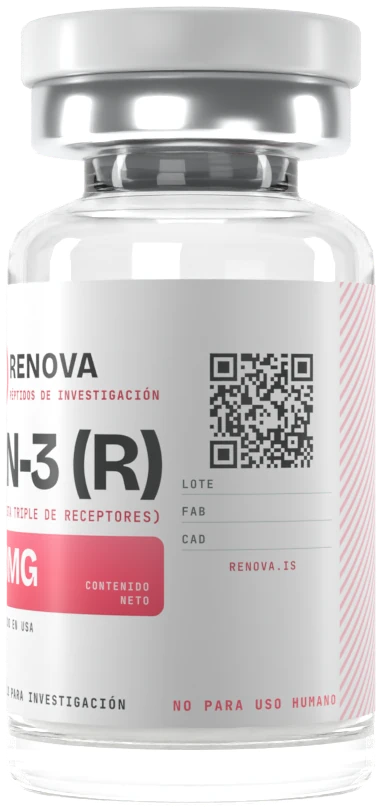
The lot on the report should match the lot on your vial. A generic report with no lot number tells you little.
A real, reachable lab
The lab should be named, independent and contactable. Use the report ID or QR code to confirm the report with them.
Identity and quantity, not only purity
Purity alone doesn’t prove what’s in the vial. Look for mass-spec identity and a measured amount per vial too.
Pureza por HPLC: qué significa el porcentaje de un COA · Espectrometría de masas: cómo se confirma la identidad de un péptido · Cómo verificar un lote con el código QR del vial · Péptidos liofilizados: qué son y cómo se almacenan en el laboratorio · Cómo elegir un proveedor de compuestos de investigación: 7 puntos